Friday, 1 November 2013

Research: Subcultures and music videos by Jemar

What are subcultures?

Subcultures are a group of people who are brought together through initial interest whom have the same common values and taste rather than mainstream thoughts and values. Subcultures are also known as a group of people who are positioned outside the mainstream culture.
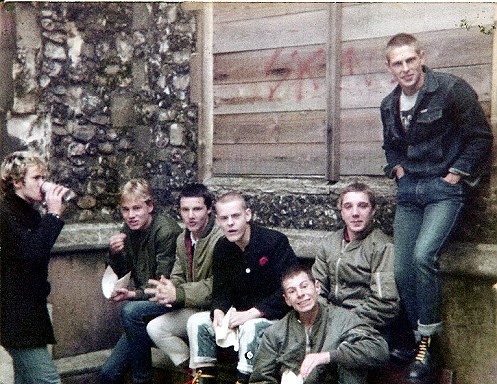
Some subcultures are based on general stereotypes such as skinheads being white, bald, white males.
Some cultures are:
·         Bikers
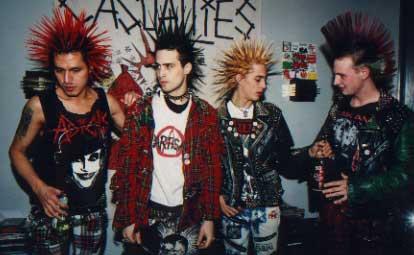
·         Punks
·         Rockers
·         Skinheads


Subcultures are generally categories in several points

Conformity and rebellion
  • ·         They do not like conformity, they prefer to rebel against common values and systems.

Attitude to capitalism and consumerism
  • ·         They don’t follow capitalism, they follow their own set of rules and behaviour conduct put in place.
  • ·         Tend to be consumerist however, consume goods which tend to be relevant to their lifestyles.

Tribal/gang rivalry with other groups in society.
  • ·         Don’t tend to mix with other groups as they don’t like it.
  • ·         Stereotype of disliking certain groups of people/races.

Traditional ideas or stereotype
  • ·         Have traditional beliefs of their own in the way they should live their lives.
  • ·         True subculture followers, do not take upon ideas of stereotypes.

Music Interest
  • ·         Niche, depends solely on the subculture group. For example, Rockers subculture will listen to rock music.

What did McCracken say?
·         Mainstream cultures and subcultures just go to show that the post-modern world is full of diversity
·         Looking at the different values and ideologies of subcultures, we are unable to say they all come from one culture.

The Birmingham School
·         It assumes that all subcultures come from one subculture and is the result of reaction and rejection to the mainstream culture.
What did Hebdige say?
·         Subcultures are groups which form a resistance against the mainstream culture. Hebdige believes that if you resist then it becomes a culture.
·         Popular music – social background can lead to different readings of the same song. People are not part of one mass culture.

Subcultures of music
·         Punk
·         Rock
·         Glam Rock
·         Alternative
·         Dubset

Subcultures and historical times in relation to music:
Many people of modern day argue that cultural music taste all depend on the historical time and structure of social economic and political change. For example, rock may have been very popular in the early 90’s but nowadays we can all say the likes of pop, hip-hi, rap have taken over to form a more mainstream cultural genre.

·         1950’s Rock n rollers, the beatniks and teddy boys.
·         1960’s Surfers, rude boys, mods, hippies and bikers.
·         1970’s skinheads, soul boys, Rasta’s, glam rockers and punk.
·         1980’s Heavy metal, hip hop
·         1990’s Artistic/Distinctive blends of music and fashion have becoming an recognizable feature of the cultural landscape.

The industry and target audience.
The music industry finds shows such as the X Factor to recruit future stars. This is the development process, where stars are created to meet the audience’s needs and desires. The audience are also given a choice of who they like and what they choose to consume as they are giving the powers to vote off certain ‘’potential stars’’. The music industry will then change and implement the stars star image then promote and market the winners to the audience in hope to make money from them. A good example of this is JLS as they were formed together as the industry knew they’d make it big and look at them now.
·         Constructed to appeal to different markets with specific values and taste.

Before

After

Current day in relation to Hebdige
·         Hebdige believes consumer music differs from person to person due to everyone having a different individual taste.
·         Social background is a big influence on how different we interpret the same song.

Current day in relation to Dyer’s theory
Richard Dyer believes in order to become a star, you will first need to become a commodity, someone that people want to buy. Stars represent a shared cultural attitudes and values. They will promote that to the audience and if liked the audience will then feel attached and apart of the star. This is when the rise to stardom slowly begins as fans will often imitate stars performance, behavior and style in order to get closer to them.
·         Stars are constructed, artificial images
·         Image differs from others (USP)

 before
After

One direction are a prime example of this as they were formed on the X factor show where although not winning, they developed a healthy fan base where the fans mostly teenage girls instantly adopted to their shared cultural values and attitudes as they were seen as normal and natural. Now there brand has been established and have been manufactured to make money.

Conclusion
From my evaluation of all the different subcultures and what forms a subculture, I believe I will just aim to target a mainstream culture as this will give my star more exposure due to sub-cultures having more of an niche target audience. In addition, targeting a mainstream culture will allow me to look for all the flaws about my star as I can then implement him/her in order to meet the needs of the audience and appeal to them.


Research: Popular music theory by Jemar

What is popular culture?

Popular culture is the understanding of fashion ideas and attitudes of the mainstream culture in society which has an influence upon us the audience. These influences and ideas are produced through the mass media and able to the audience through cultural products. These cultural products vary from Music, art, film, fashion, television and radio.

Popular Culture:

Popular culture describes the lifestyle and taste of artist to young people in a mass media market as they are very easily influenced due to cultural products such as music. Music by people like Beyoncé and Brittany spears are examples of artist who are looked up to and followed by many. The pop culture overtime changes by the young of the world and at the same time the youth of the world change along with pop culture.

Arguments
  • ·    Pop culture is controlled by the people who tend to control the mass media as they dull people’s minds, making them passive and easier to control.
  • ·    Pop culture is rebelling against the culture of dominant groups. (Overthrow capitalist system)

Antonio Gramsci – Hegemony:

The mass media control can influence things such as what shows get aired and to the degree to which a television news station may or may not cover certain news stories. This is because leadership/dominance changes what we get exposed to for example, we hear about all earthquakes and massacres in The US while the same things are happening in countries across the world which we don’t even hear nothing about or even acknowledge. Italian political theorist says the media shows us what they want to see as a means of maintaining the state of control by the capitalist system in society.
  • ·         Society is dominated by the ruling class who manipulate our culture which results in the audience thinking the same and not challenging the cultural dominant ideologies.
  • Technology & Hegemony
  • ·         Music artist and actors around the world are all avoiding the mass media by self-publishing their music and videos on accessible sites to all audience rather than being under the control of mainstream corporations.

Modern day Hegemony
·         Power and dominance in society is sustained by constructing ideologies which are promoted by the mass media through the means of cultural products. This makes us moulded and made to believe what the media tells us.
  • Once you control their minds, you then control what they like.
  • Early leaders who are referred to great dominance and power over others are also viewed as hegemony’s. 

Frankfurt School:

Pop music is an end product of a production line, it’s from a cultured industry which exploits the mass population for profit and social control, in hope they accept the ideologies about the world they live in. The Attitudes, habits, intellectual and emotional reactions of the audience are put into consideration and used to manipulate them as a pattern of one-dimension thought and behaviour starts to develop due to the manipulating methods.
  • ·         The music industry promotes absorption as everything about pop stars becomes commodity. E.g. Their Images, looks, dislikes etc…

Theodor Adorno:

Popular media and music products are characterised by standardisation which is when they are basically similar in a sense and pseudo-individualisation meaning minor differences put together to make them seem distinctive, but they're not.

  •  Capitalism feed the audience with pop culture which is opposed to ‘true art’. They’re exposed to products created by the mass media which is easier to understand than true art forms.
  • Distinguishes between popular music and serious music, serious music is seen as classical, it plays to create pleasure of imagination. Popular music on the other hand is viewed to make everyone think the same.

Serious music
·         Deep, meaningful and natural
Popular music
·         False, unnatural and manipulative

Birmingham School:

Modern day school of thought which challenged some of the ideas Theodor Adorno and The Frankfurt School claimed about the popular culture. The school as a whole believes after evaluation these claims that the audience are not as passive as made to believe.
  • ·         Evaluated the representation of the effects the popular culture has left on the audience.
  • ·         Indications of engagement by the consumers about what they like or don’t like is noticed.

Dick Hebdige:

Hebdige disagrees with Adorno to an extent and says he is being really dismissive of the mass audience when he calls them passive and easily manipulated. Instead he believes consumption is an active process and people don’t choose to follow the capitalist consumerism but instead the audience have different readings which then fall into the same cultural products.
  • ·  Audience are free to resist the power/dominance of large companies by ignoring them or finding different/alternative products to consume. This often makes them distinct from the mainstream culture which then turns into a subculture.
  • ·     Large companies will then produce and market new products in order to cater for this subculture in hope they’ll consume it. Therefore, this makes the audience more active in popular culture consumption.

Conclusion:

I believe the popular culture creates false needs which are formed by people by the different culture industries they are exposed to. These are needs can be both created and satisfied by the capitalist system, and which replace people's 'true' needs. For example, the mass marketing, advertising and media industries change the way we think. I believe us as everyday audiences are manipulated into thinking the way the capitalist wants us to, this is all as result of the mass media which maintains the control of the capitalist. These features all are particularly true when placed into the context of in pop music industry. All music products are commodities to be sold to an audience who believe they are consuming ‘true’ emotion. I will represent my Artist/Band in true light in order to show the deal to my target audience instead of creating a unnatural and forced end product.


Research: Dyer’s ‘Star Theory’ of music videos by Jemar

What is star theory?

The term ‘Star’ refers to a set of meanings constructed around music performers in order to sell the performer to a large and loyal audience base.  Dyer see’s artist as an artificial image presented to their target audience, even if they are being represented as ‘real people’.
Audience’s relationship with the industry and the star doesn’t necessarily have to be a positive thing, as long as the relationship is strong. It also depends on the audiences taste and the actual character.

Richard Dyer:

Richard Dyer says stars are constructed in order to satisfy and appeal to a certain target audience.
  • ·         Said star image is incoherent, that it is incomplete and ‘open’.
  • ·         Star must be simultaneously present and absent for the consumers.

The Difference between a performer and a pop star.
  • ·         Performer – Is when an image is constructed to an artist and presented to the audience.
  • ·         Pop star – May or may not be famous however, is there just to perform music.

Pop performers are often described as pop stars as they promote their status and image by their management. However, a true pop star has a long lasting significant and has ‘brand awareness’ amongst a wider market over a period of time.

Richard Dyer’s four elements to recognising a Star:
  • ·         Stars and constructions
  • ·         Industry and audience
  • ·         Ideology and culture
  • ·         Character and personality
Stars as constructions
  • ·         Stars are constructed, Artificial images
  • ·         Image contains a Unique Selling Point

Dyer believes the music audiences are made to believe that star that is seen to be real and genuine is actually a fake, artificial image which is created to appeal to a target audience. For example, Miley Cyrus who for years is represented as a sweet, innocent young teenager and now has broken out and proven that she is the total opposite of her traditional representation.


Industry and audience
  •  Stars are manufactured to make money
  • Pop stars are the product of their record label (Must be sold)
  • There is always someone fresh to choose from, Another way is to produce a star with long lasting appeal who once them and their brand is established can cater for a target audience for decades.  For example, Justin bieber.


Ideology and culture

  •  Represents cultural values, attitudes and promotes a certain ideology
  • Audience interest in these values enhances the ‘Star quality’ and creates their star persona.
  • Social networks sites such as Twitter and Facebook now days give pop stars the opportunity to establish their own values outside their own music. This gives them a true insight of the Star and able to judge whether or not the star is constructed or genuine.

Character and personality
  • ·         Star is constructed however, the construction has a foundation of realism
  • ·         Star provide the audiences with a focus for ideas of ‘what people are supposed to be like’
  • Some stars may support the hegeomony which is the dominant cultural ideologies by confronting it head on or by providing differences.

Control
  • An artist doesn’t necessarily have as much control of their life as let’s say a film actor as an artist is continuously following instructions and being told what to do, how to dress and present themselves etc. compared to a film actor who has more of a freedom.
  • TV programmes such as The X Factor shows us the audience how the construction progress happens as we get to see how an ordinary person’s star image changed as they are groomed and styled to look different in order to appeal to the audience.
  • Stars are constructed by the industry, artificial star images are used to fit the industries needs of targeting and appealing to a specific target audience in order to make money off them.


Conclusion

This star image theory has been very useful in my planning on how i will go about representing my star/band as i have gained a better insight on how much control the artist actually has on their own life and how they choose to present themselves. I believe i will allow my artist to show his or hers true colours as this will allow them them to form a better relationship with the audience in order to appeal to them.

Rsearch: Star image in music videos by Jemar

what is star image?

Star image is the way an artist is represented to the audience. Music videos are seen as the most effective way to do this as it is able to reach a mainstream and international audience. Star image makes an artist unique as they’ll all have their own styles which will allow them to create an expectation of themselves. In addition, they can also use their star image to reinvent themselves in order to change from their representation or to target new audience.

How can music videos help boost an artist’s career?
  • ·         Promotion
  • ·         Wealth and Money
  • ·         Reinvent image
  • ·         Appeal to Target Audience
  • ·         Audience Pleasure

Miley Cyrus Story


Miley Cyrus just began Hannah Montana here as we can see she is really young and innocent and this is represented through the way she dresses. She is seen to be enjoying her childhood and road to fame due to her She chilled out and cheerful and chilled out.. The lyrics she uses are very childish and innocent. She doesn’t necessarily have a target audience yet due to her yet to make herself known and establish herself.


This image a few years later shows Miley Cyrus looking much more mature as she has turned into a beautiful young adult. At this point in her life she has a target audience of both young girls and boys, whilst seen as an intimidating figure towards teens due to her being very attractive. She didn’t dance much but when she did they were choreographed danced routines in order to make her the centre of attention.


Miley Cyrus is seen here just after she left her TV show Hannah Montana, she is seen as glamorous, sophisticated yet sexy and intimidating adult. She has a wider range of target audience now as she attracts and targets a lot of male audience because of her looks as she is seen as a sexual object. At this point Miley Cyrus begins to become a lot more independent and this is shown through her dance moves as she performs her own dance moves now and is seen to be a little more revealing. She is viewed as even more lyrically confident towards the opposite sex as she is more mature and her lyrics are more meaningful.


At this point the traditional Miley Cyrus we have all grown to love has gone on a rollercoaster due to the dramatic change which has occurred in her left just a year after leaving Hannah Montana and becoming more independent. She is now viewed as a sexual object designed to visual pleasure both men and women. Her target audience will have known changed from young children to young adults and above due to the sexual references which are associated with her. Wrecking ball is seen as her first big step to change due to all the sexual tension and implications she creates in the video. Compare this to her climb video a few years ago and you can see how her star image has changed dramatically.

From This short sequence of Miley Cyrus’s path to change we are able to see just how her star image has progressed so much. This is because overtime some artist matures and evolves into something out of their representation. 

Stars and their image


Adele Is a British singer who is known for the deep, meaningful music she produces. She is a very sophisticated and independent individual. She has a target audience of from a young adult age (16) to (30+) or so. She doesn’t necessarily dance as she has built a reputation of just needed a mic and her voice to entertain her audience. She is lyrically strong as her lyrics are really meaningful and ordinary which allows her audience to relate to her. For example, her break up song, Someone like you.


Selena Gomez is another young artist who was very similar in comparison towards Miley Cyrus who chose not to go down that sexual voyeuristic route as Miley did. She is also very independent since leaving her TV show and is now seen as a very mature and respectful young adult. This is shown through the way she represents herself as she dresses and looks very sophisticated. She’s recently just released a new perfume line which suggest that she is trying to appeal, attract and target more new audiences. In addition, this also allows her to promote and advertise herself to different markets such as the perfume industry. Like her independence, her dance moves are very independent as she choreographs her own routines compared to a few years ago. Selene Gomez is also lyrically different as she sings more mature and meaningful songs in which her fans can relate to.

·         Artist’s Star image

 Sexual reasons,
·         Help express sexuality
·         Sexual views
·         Exploit or to feel comfortable
Political reasons
·         For/Against something political
·         Express political views
Moral reasons
·         Personal opinions
·         Issues they believe are important
Social reasons
·         Represent lifestyle or ideologies of having a good time.

Conclusion

Star image is important as it represents the artist to the audience through the use of music videos. The artist’s star image represents themselves which allows the audience to get closer and be able to relate to the artist. I plan to present my Star in a very innocent yet mature manor as I don’t have a big enough fan base to go on a rollercoaster like Miley Cyrus did.

Research: Mulvey’s male gaze by Jemar

What is the Male Gaze theory?

The concept of male gaze is how the heterosexual male gender looks at the voyeuristic female genders that are presented to them in music videos.
Feminist believe that women are viewed different in order to attract and please the male target audience.

Different ways it can be thought of:
  • ·         How men look at women
  • ·         How women look at themselves
  • ·         How women look at other women
Laura Mulvey’s ‘Male Gaze’ (1975)

Laura Mulvey is a british feminist film theorist who believed that women in music videos are viewed from a heterosexual male perspective due to their representation.

Laura Mulvey’s Feminist Theory on the Male gaze suggests:
  • ·         Audiences ‘view’ characters from the perspective of a heterosexual male.
  • ·         Men only look at women for visual pleasure.
  • ·         Active Male/Female Passive
Examples of the ‘Male Gaze’ used in music videos.

- Benny benassi - Satisfaction

In the Satisfaction music video, women are represented as hard working, voyeuristic individuals. The way they are dressed and how they choose to wear their clothes makes them in a male’s perspective look like sex symbols. An example of this is when one of women are viewed using the sander in a seductive way, cinematography is seen in this motion as the camera focuses on her body rather than her face. A close up shot is then used to view her breast. This reinforces Laura Mulvey’s Theory of characters being viewed from a heterosexual male’s perspective.

- Rihanna – Pour it up

Male gaze is heavily exploited in this music video as every female is seen demonstrating the male gaze, including the artist Rihanna who is known for her sexual behavior in her music videos. Firstly, when one of the women is seen dancing on a pole in her revealing clothes, close up editing is used to focus on the women shaking her ass. This is a sign of voyeurism as the camera movements make the women viewed differently as they are now seen as sexual objects and fantasy’s to men. This relates and reinforces Laura Mulvey’s theory of men looking at women for visual pleasures.

- Mariah Carey – Touch my Body

The ‘Male  Gaze’ is represented throughout this music video as the artist Mariah Carey is seen behaving in a seductive and voyeuristic manor. This is first seen through the way she dresses throughout the music video, she wears very sexy matching stockings and bra, short tight skips and revealing tops which shows a lot of cleavage. Close ups are used to focus on her curves and boobs. This suggest that this is all that men think of when they look at women as a lot of the focus was on her curves, ass and boobs. Laura Mulvey’s theory is then introduced her as this relates to her saying men only look at women for visual pleasure. In addition, at the end of the music video it shows that the video turned out to be nothing but a fantasy for the male character which reinforces the visual pleasure statement.

‘Male Gaze ‘ Criticisms
  • ·         Directed towards men – New age of commercialism
  • ·         Assumes everyone is heterosexual
  • ·         Doesn’t consider female spectators
  • ·         Views are many from a heterosexual perspective.

 Conclusion


Evaluating all my research I’ve gathered, I’ve decided I will in fact be using the ‘Male Gaze’ in my music video if I do use women as this will allow me to target a male audience. I will represent women in my music video very seductive fashion in order to give my music video a bit of something special.  However, I could lose potential female feminist audience as they may not like the way women are presented in my video.

Research: Intertexuality in Music Video - Jemar

What is intertextuality?

Intertextuality is when the music video has formed a relationship with or shows reference to something/one else. This can be done in a number of ways, for example gimmicking an artist, making reference to someone political or displaying an ideology of something. This is often called an intertextual reference as it is being ‘referred’ to in the video. Theorist Andrew Goodwin suggests that intertextual references in music videos are becoming very popular as it is now a new way of entertaining the audience.

Why it might appeal to an audience?

Intertexuality is used in most music videos as it allows the audience to relate themselves to the music or artist due to the unique effects used by the artist in the music video. References allow the music video to seem controversial which then allows the audience to make they own interpretation of the music video. Some intertextual references can appeal to a target audience due to the audience manipulating these references into humour and making the music video more interesting compared to the usual conventional music videos.

Intertexuality in Music Videos

Many artists nowadays use the concept of intertextuality in their music video in order to make it appeal to their target audience in some way, shape or form.  An example of a music video which demonstrates intertextuality precisely is Alexandre Burke’s single Hallelujah. This is because there are a series of different shots of her X factor journey before switching back to her actual music video.

- Alexandre Burke - Hallelujah

Another example is One direction’s song called the best song ever where they are seen acting in it like a film. This is seen as controversial as it refers back to the reference of them acting different due to the industry’s high demands. For example, during the music video the marketing advisor is seen trying to make the boys act and dress different.

- One Direction - best song ever

George Michaels music video called ‘Outside’ is another example of how intertexual references are made within a music video. The video starts of having a resemblance to a porn channel before close up shots are used to show the audience a view of a women’s chest whilst she is seen undoing her top. The camera switches several times to show the audience that the male character is staring at her. This is done in order to create intensity and a sexual tension between the two characters. The female seen biting her lip along with the film credits at the opening to make the video look more like a narrative based film adds to the representation of the video representing porn. Crime television can also be represented in this music video as it is designed to look as if the footage is coming from a surveillance camera on a helicopter in which most people will relate this to the authority and law.


Advantages of Intertexuality
  • ·         Forms a relationship with Audience.
  • ·         Unique to other conventional Videos
  • ·         Targets Audience’s interest such as Humour

Disadvantages of Intertextuality
  • ·         Lead to a Lawsuit
  • ·         Confusion amongst Audience
  • ·         Controversial - Damage Reputation/Image
  • ·         Takes away attention From Artist/Narrtive

 Conclusion


From all my research in and around intertexuality in music videos, I’ve decided I won’t be using any references in my music video as I fear it may take away a lot of the attention from the music and narrative. It could possibly damage my artist’s image which isn’t good as this means I’ll be appealing to fewer audiences. In addition, Adding intertexual references may confuse my target audience which I hope to appeal to.

Research: History of Music Videos by Jemar

How have modern day music videos changed from traditional music videos?

Modern day music videos compared to traditional music videos back in the 90’s has changed drastically due to the improvements in modern day technology which allows artist to add further elements in their videos in order to appeal to their target audience. These elements range from lighting, different edit styles to the ways in which camera shots are taken. These changes also allow artist of the modern day to be more artistic and creative with their music video as they use it to enhance or even reinvent their star image in hopes to appeal to their target audience.

How important are music videos today?
  • ·         Marketing tool.
  • ·         Entertainment purposes.
  • ·         Builds, loyal fan base.
  • ·         Exposure.
  • ·         Share values & ideas.

Music History Timeline:

1929: Bessie Smith featured in ‘’Saint Louis blues’’ which was the first musical film ever released at the time. Although it features a narrative based dramatized performance of a hit song, it was not and still isn’t regarded as a music video due to the minimal use of elements used in which would make it conventional to a music video. These elements varied from the little use of editing to no lighting at all due to the film being recorded in black and white.

1940: Walt Disney released an animated film called Fantasia which was based mostly around famous segmented pieces of classical music which was visually match as the use of moving images was introduced within this time period.  Although this film does follow the general conventions of a music video due to the edits used, it isn’t classed as a music video as during the production process the film wasn’t produced to be a music video.

From 1930-40 the use of moving images was used by many films around this time especially animation, as this was seen as a big and popular genre during this time period.

1956: In 1956 Tony Bennet performed a song called ‘Stranger in paradise’ as he walked through Hyde Park singing it. Due to the UK and US distribution he had, He later claimed due to this he created the first ever music video. However, this statement is viewed as undone as he’s intentions weren’t to create a music video. In addition, the elements used in this video didn’t match those of a conventional music video
.

1964: The Beatles were a part of the first major motion picture music video called ‘’ Hard day’s night’’, this music video is seen as a concept based video due to the lack of meaning and relations between the visuals and the lyrics. This music video has the basic visual elements in which you’d see in today’s music videos. From then the Beatles began to produce and merge moving images with their music in order to appeal to the audience.

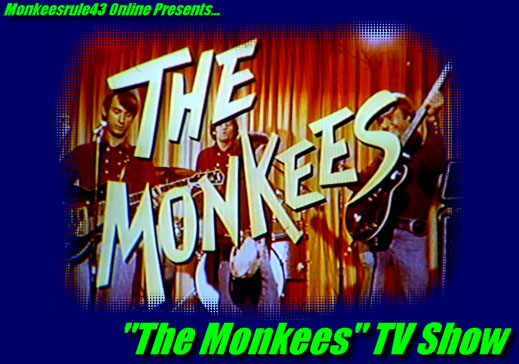
1966-1968: The monkey’s was a TV show in which at the end of each episode had a short film segment created in order to accompany their song which was used in their TV series. However, these short films weren’t seen as a music video due to the lack of conventional conventions used.


1966: The birth of Pop of the pop (TOPT’s) was made announced as they were created to promote different singles for different artist. TOPT was seen as a promotional benefit as provided exposure to an artist as it meant they were advertised to a large variety of different audiences with different taste and interest. In addition, This also created competitive videos by artist as they all competed for air time.


1967: The Beatles begin to develop different techniques from films such as film effects, dramatic lighting and different camera angles in order to make their music video more conventional and appealing to the audience.


1975: in 1975 the music video ‘Bohemian Rhapsody’ became the first ever video to be created specifically for that song to be played on TV in order to replace a live performance on TV. This song was created by Queens and was the first ever song to be made on a video format.


From the years from the 1970 to the 1980 the introduction of high quality videotape recorders and portable video cameras allowed artist to produce promos cheaply and efficiently rather than filming the whole thing as it was very expensive.


1980’s: During this time period, the launch of MTV was revealed as they later became musical success. By the Mid 80’s their music videos would grow to become a central role in the music industry. The like of Madonna owes a great deal of her success due to the advancements in the music industry which allowed her to construct a seductive appeal towards her audience.

1981: This was the official launch of MTV and the development of music videos, the first video to be aired was called Buggies which is known as the video that killed the radio star. This quote refers to the saying of technology enhancements in music videos killed the popularity of the radio which at one point was seen as a major distributor in the music business. There are other quotes such as ‘’Picture came and broke our hearts’’.  Artist in the 1980’s began to create more of a sophisticated effect in their music video in order to appeal and stand out against others. In addition, storylines and plots were also added in order to make them more appealing.


1984: In 1984 Michael Jacksons music video, Thriller was seen as breathe taking to the modern age as it took music video format to a whole another level. This was due to the conventional elements used in this video which made it very appealing and entertaining to its target audience. These elements varied from the intellectual references made to make the video look more like a film to even the voice overs used in order to create suspense amongst the audience.


TOTP’S also began to censor video contents as Duran Duran become the first ever video to be censored due to the use of sexual contents which is featured.

How have music video changed over time?

Music Videos have changed drastically over time due to the forever new changes to technology. Music videos now compared to a long time ago use conventional elements such as Editing, lighting and cinematography in the videos in order to make them appealing to the target audience. In addition, compared to a few years ago music videos are now able to be consumed through many different sources compared to the early 90’s where videos were seen in Films or on the radio.

Ways videos are currently consumed?
  • ·         Youtube
  • ·         Vevo
  • ·         Laptops
  • ·         Social media websites
  • ·         iTunes
  • ·         Consoles
  • ·         TV Channels
  • ·         Advertisments

Conclusion


This post has allowed me to learn and understand about the early years of music and how developments and changes in technology have influenced the major change in how music is produced and consumed. This post has allowed me to see the importance of music videos to present day and see through the use of conventional elements the impact music videos have on the audience.