What are
subcultures?
Subcultures
are a group of people who are brought together through initial interest whom
have the same common values and taste rather than mainstream thoughts and
values. Subcultures are also known as a group of people who are positioned
outside the mainstream culture.
Some
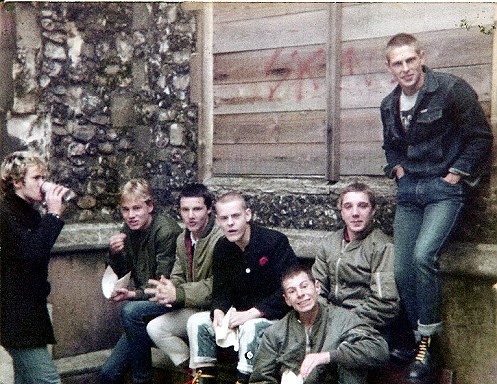
subcultures are based on general stereotypes such as skinheads being white,
bald, white males.
Some
cultures are:
·
Bikers
·
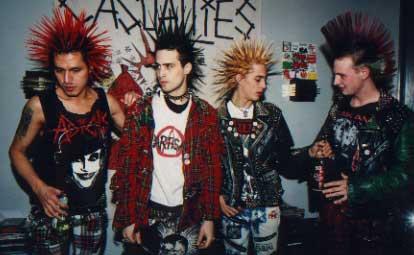
Punks
·
Rockers
·
Skinheads


Subcultures
are generally categories in several points
Conformity
and rebellion
- · They do not like conformity, they prefer to rebel against common values and systems.
Attitude to
capitalism and consumerism
- · They don’t follow capitalism, they follow their own set of rules and behaviour conduct put in place.
- · Tend to be consumerist however, consume goods which tend to be relevant to their lifestyles.
Tribal/gang
rivalry with other groups in society.
- · Don’t tend to mix with other groups as they don’t like it.
- · Stereotype of disliking certain groups of people/races.
Traditional
ideas or stereotype
- · Have traditional beliefs of their own in the way they should live their lives.
- · True subculture followers, do not take upon ideas of stereotypes.
Music
Interest
- · Niche, depends solely on the subculture group. For example, Rockers subculture will listen to rock music.
What did
McCracken say?
·
Mainstream cultures and
subcultures just go to show that the post-modern world is full of diversity
·
Looking at the different values
and ideologies of subcultures, we are unable to say they all come from one
culture.
The
Birmingham School
·
It assumes that all subcultures
come from one subculture and is the result of reaction and rejection to the
mainstream culture.
What did
Hebdige say?
·
Subcultures are groups which
form a resistance against the mainstream culture. Hebdige believes that if you
resist then it becomes a culture.
·
Popular music – social
background can lead to different readings of the same song. People are not part
of one mass culture.
Subcultures
of music
·
Punk
·
Rock
·
Glam Rock
·
Alternative
·
Dubset
Subcultures
and historical times in relation to music:
Many people
of modern day argue that cultural music taste all depend on the historical time
and structure of social economic and political change. For example, rock may
have been very popular in the early 90’s but nowadays we can all say the likes
of pop, hip-hi, rap have taken over to form a more mainstream cultural genre.
·
1950’s Rock n rollers, the
beatniks and teddy boys.
·
1960’s Surfers, rude boys,
mods, hippies and bikers.
·
1970’s skinheads, soul boys,
Rasta’s, glam rockers and punk.
·
1980’s Heavy metal, hip hop
·
1990’s Artistic/Distinctive
blends of music and fashion have becoming an recognizable feature of the
cultural landscape.
The industry
and target audience.
The music
industry finds shows such as the X Factor to recruit future stars. This is the
development process, where stars are created to meet the audience’s needs and
desires. The audience are also given a choice of who they like and what they
choose to consume as they are giving the powers to vote off certain ‘’potential
stars’’. The music industry will then change and implement the stars star image
then promote and market the winners to the audience in hope to make money from
them. A good example of this is JLS as they were formed together as the
industry knew they’d make it big and look at them now.
·
Constructed to appeal to
different markets with specific values and taste.
 Before
 After
After
Current day
in relation to Hebdige
·
Hebdige believes consumer music
differs from person to person due to everyone having a different individual
taste.
·
Social background is a big
influence on how different we interpret the same song.
Current day
in relation to Dyer’s theory
Richard Dyer
believes in order to become a star, you will first need to become a commodity,
someone that people want to buy. Stars represent a shared cultural attitudes
and values. They will promote that to the audience and if liked the audience
will then feel attached and apart of the star. This is when the rise to stardom
slowly begins as fans will often imitate stars performance, behavior and style
in order to get closer to them.
·
Stars are constructed,
artificial images
·
Image differs from others (USP)
 before
 After
After
One
direction are a prime example of this as they were formed on the X factor show
where although not winning, they developed a healthy fan base where the fans
mostly teenage girls instantly adopted to their shared cultural values and
attitudes as they were seen as normal and natural. Now there brand has been
established and have been manufactured to make money.
Conclusion
From my
evaluation of all the different subcultures and what forms a subculture, I
believe I will just aim to target a mainstream culture as this will give my
star more exposure due to sub-cultures having more of an niche target audience.
In addition, targeting a mainstream culture will allow me to look for all the
flaws about my star as I can then implement him/her in order to meet the needs
of the audience and appeal to them.

Jemar, a good post. You identify some great sub-cultures of our history, and discuss well general assumptions of those in that fit into sub-cultures.
ReplyDelete-you have considered the way the industry now tries to appeal to maintream culture and the idea of 'star' with your discussion on X factor, now try and think about artists that they have on the show that are considered a bit more niche, like James Arthur, Frankie Cacoza? Why do you think the industry now tries to do this?
-what musical genres today are still perceived to be associated with sub-cultures? Why do you think this is so?
-what do sub-cultures of music generally seem to sing about
-think about groups like 'Bikers' and 'Punks' , state whether you believe they still have some sort of 'Star image' if people are choosing to dress like them...?